
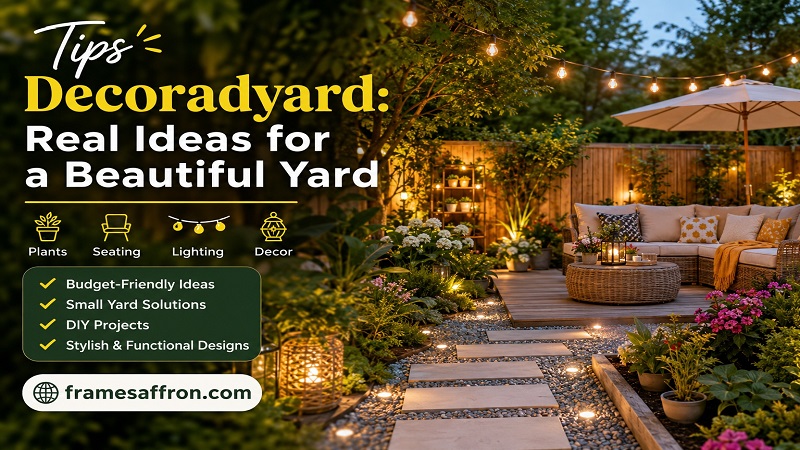
To implement tips decoradyard effectively, focus on zoning your space with durable furniture, layered lighting, and strategic planting. Successful tips decoradyard require measuring your area first to prevent overcrowding and maintain open walkways. Incorporating vertical gardens is one of the best tips decorated for small spaces, as it draws the eye upward.
For budget-conscious homeowners, excellent tips include applying fresh paint to old furniture and installing solar lights. Ultimately, these decoradyard tips create a beautiful, highly functional outdoor living room.
How Do You Start Decorating Your Yard?
To start decorating your yard, you must evaluate your available space, establish a clear budget, and create a foundational layout plan before purchasing any materials or furniture. Taking an inventory of your yard’s natural conditions ensures that your design decisions align with the environment, saving you time and money.
Assess Your Yard’s Size and Layout
Begin by measuring the exact dimensions of your outdoor area to understand your structural limits. Use a tape measure to record boundaries, patio dimensions, and the distances between permanent fixtures like trees or fences. During this assessment, observe the yard at different times of the day to map out sunny and shaded locations, which will dictate where to place seating and what types of plants will thrive. Additionally, examine the topography to identify drainage patterns and existing landscaping features that you want to keep or modify.
Choose the Main Purpose of the Space
An outdoor area cannot be everything at once without feeling chaotic, so you must define how you intend to use it. Decide whether your priority is hosting large dinner parties, creating a quiet reading corner, establishing a safe play area for children, or cultivating a productive vegetable garden. Defining this primary purpose gives you a clear filter for making design choices.
Create a Simple Outdoor Design Plan
Sketch a basic overhead map of your yard on graph paper or a digital design app. Mark the high-traffic walkways to ensure pathways remain unobstructed, then draw rough shapes to represent different functional zones.
Before moving forward, utilize this quick preparation checklist:
- Measure the length and width of the total outdoor footprint.
- Track sun exposure for at least one full day to note full sun and deep shade zones.
- Check for low points where water collects after a heavy rain.
- Write down a firm maximum budget for materials and décor.
- Sketch a basic layout map indicating entries, exits, and pathways.
What Are the Best Backyard Decor Ideas for a Beautiful Outdoor Space?
The best backyard decor ideas focus on creating distinct focal points, managing color palettes, and selecting structural elements that enhance the natural landscape. Avoiding the temptation to add décor simply for the sake of filling empty space is essential to maintaining an open, elegant atmosphere.
To elevate your yard, integrate comfortable outdoor seating areas and accent them with weather-resistant outdoor rugs that ground the space like an indoor living room. Use decorative planters of varying heights to introduce visual texture, and place selective garden sculptures or water features to draw the eye toward specific viewports. Decorative fencing and privacy screens can block unsightly views while adding architectural interest. When selecting these items, adhere to a coordinated color scheme—such as warm earth tones, cool blues and grays, or vibrant monochromatic accents—to bind the elements together.
How you scale these ideas depends entirely on the size of your yard:
- Large Yards: Establish multiple independent focal points, such as a large stone fire pit zone on one side and a formal dining pergola on the other, connected by a clear gravel or flagstone walkway.
- Medium Yards: Focus on a centralized outdoor sofa arrangement backed by a striking water feature or an elegant privacy screen adorned with climbing vines.
- Small Yards: Keep the center open and use single, high-impact items like a bold accent wall, a beautifully crafted bistro set, or a tiered decorative planter display against a fence.
How Can Plants Transform Your Yard Decor?
Plants transform your yard decor by introducing organic color, texture, softening hard architectural lines, and establishing structural boundaries within the landscape. Choosing the right greenery requires a deep understanding of your regional climate, soil quality, available space, sun exposure, and the amount of maintenance you are willing to perform.
Best Plants for Small Yards
In tight spaces, traditional sprawling bushes can overwhelm the area, making it feel cramped. Instead, choose compact varieties that offer high visual impact without rapid horizontal growth. Dwarf conifers, ornamental grasses like blue fescue, and slow-growing perennial flower beds provide excellent structure. Utilizing container plants allows you to move greenery around as needed, keeping pathways clear.
How to Use Vertical Planting
When horizontal square footage is limited, vertical planting is the most efficient way to maximize greenery. Incorporate climbing plants such as star jasmine, clematis, or ivy along fences and trellises. Hanging plants and wall-mounted vertical gardens turn bare exterior walls into living art installations, adding lushness without taking up valuable floor space.
How to Combine Different Plant Heights
To create depth, employ layered planting techniques. Place taller structural shrubs or trees at the back of your garden beds against fences or walls. In front of them, arrange medium-height plants like ornamental grasses or perennial flowering shrubs. Finish the border with low-growing ground covers or annual flowers. This stepped approach mimics natural ecosystems and makes the perimeter of your yard feel expansive.
How Do You Choose Outdoor Furniture for Your Yard?
To choose the right outdoor furniture, you must match the dimensions of the pieces to your available space while prioritizing weather-resistant materials that suit your local climate. Investing in durable construction prevents the need for frequent replacements and ensures long-term comfort.
Select furniture based on how you intend to use your yard, keeping in mind durability, required maintenance, storage capabilities, and your budget. For instance, metal and synthetic wicker hold up well against heavy rain, while heavy teak or shorea wood offers excellent wind resistance but requires periodic oiling.
| Furniture Type | Best For | Space Requirement | Main Benefit | Important Consideration |
| Bistro Set | Small balconies and tight patio corners | Low footprint | Compact, lightweight, and easy to move | Limited seating capacity for guests |
| Outdoor Sofa | Casual relaxation and family gatherings | Medium to high space | High comfort, mimics indoor living | Requires weather protection and cushion storage |
| Bench | Narrow pathways and garden borders | Minimal depth | Flexible seating, low profile | Less built-in cushioning for long sitting periods |
| Dining Set | Al fresco meals and formal entertaining | High cleared area | Accommodates group meals seamlessly | Requires a large, completely flat surface |
The table above illustrates that every furniture choice requires balancing spatial constraints against your social goals. A bistro set excels in restricted areas because its thin profile preserves foot traffic, whereas an outdoor sofa or full dining set demands a large, dedicated footprint to ensure guests can pull out chairs or walk around the perimeter without stepping into garden beds.
What Lighting Ideas Make a Backyard Look Better at Night?
Outdoor lighting makes a backyard look better at night by creating a warm atmosphere, highlighting architectural and natural features, and ensuring safe navigation along pathways. A successful outdoor lighting scheme relies on layering different types of illumination rather than relying on a single, overpowering floodlight.
To achieve a balanced look, distribute your light sources across four distinct categories: ambient lighting for general illumination, task lighting for specific activities like grilling, accent lighting to showcase focal points, and pathway lighting for safety.
| Lighting Type | Ideal Placement | Power Source | Primary Effect |
| String Lights | Zig-zagged over dining patios or pergolas | Plug-in / Solar | Warm, festive ambient glow |
| Solar Path Lights | Alternated along walkway borders | Solar | Clear navigation, structural definition |
| Lanterns & Candles | Nestled on tabletops or steps | Battery / Wax | Intimate, low-level task accentuation |
| Wall & Step Lights | Mounted to deck risers or exterior brick | Hardwired | High-visibility safety, structural shadow play |
| Accent Spotlights | Base of large trees or stone sculptures | Low-voltage wire | Dramatic up-lighting, vertical scale |
When positioning your fixtures, prioritize safety by illuminating changes in elevation, such as steps and patio borders. Opt for warm-toned LED bulbs (around 2700K) to avoid a harsh, commercial appearance, and ensure all fixtures carry an appropriate weatherproof IP rating to withstand rain and moisture exposure.
How Can You Decorate a Small Yard Without Making It Look Crowded?
To decorate a small yard without making it look crowded, you must utilize vertical real estate, select multifunctional or compact furniture, and establish a singular, clear focal point to anchor the visual composition. Keeping physical and visual pathways clear allows light and air to move through the space, creating the illusion of a much larger area.
Use Vertical Space
When floor space is scarce, move your decorative elements upward. Mount small planters directly to your fencing, hang trailing vines from overhead beams, or install tall, slender trellises. This draws the eye skyward, making the physical footprint of the yard feel less restrictive.
Choose Furniture That Fits the Scale
Avoid oversized, heavy sectional sofas or bulky dining sets that swallow the entire patio. Instead, opt for visually light furniture with slender frames, such as wrought iron or thin acacia wood. Foldable or nesting furniture is highly effective because it can be tucked away when not actively in use.
Create One Strong Focal Point
Instead of scattering multiple small decorations throughout a small yard—which creates visual clutter—choose one high-impact feature. A beautifully styled accent wall, a compact water fountain, or a single ornamental tree acts as an anchor, organizing the surrounding space.
To keep your small yard design organized, adhere to these structural boundaries:
| Do | Don’t |
| Measure furniture footprints before purchasing. | Buy oversized furniture based on guesswork. |
| Use vertical planting to maximize greenery. | Fill every flat surface with potted plants. |
| Keep central pathways open and unobstructed. | Block natural foot circulation paths. |
| Choose multifunctional pieces like storage benches. | Add unnecessary, single-purpose decorative clutter. |
| Use a consistent, limited color palette. | Mix too many competing, bright colors. |
What Are the Best Budget-Friendly Yard Decorating Ideas?
The best budget-friendly yard decorating ideas involve reusing and refreshing your existing assets, sourcing materials secondhand, and focusing on high-impact DIY upgrades rather than executing massive structural renovations. You do not need an expensive contractor to create a beautifully detailed outdoor environment.
Yard Decor Ideas on a Small Budget
You can drastically change the appearance of your yard by cleaning, pruning, and reorganizing what you already own. Power-washing a stained concrete patio, cutting clean edges along your lawn borders, and applying a fresh coat of exterior paint to weather-beaten wooden furniture costs very little but yields a dramatic visual transformation. Sourcing secondhand items like vintage metal chairs or old wooden ladders from online marketplaces offers character at a fraction of retail prices.
Easy Weekend Backyard Makeovers
A standard weekend is enough time to install affordable gravel pathways, lay down a budget-friendly outdoor rug, or weave solar-powered string lights through your tree branches. These quick upgrades create an immediate atmosphere and define your seating areas without requiring advanced construction skills.
DIY vs. Store-Bought Yard Décor
Building your own decorative elements allows you to customize the size and color to match your specific layout while saving money on assembly and shipping fees.
| Project | Difficulty | Relative Cost | Time Required | Best For |
| Painted Terracotta Pots | Easy | Very Low | 1–2 Hours | Beginners looking for an easy color pop |
| Hanging Planters | Easy | Low | 1 Hour | Small yards with restricted floor space |
| Wooden Planter Box | Medium | Low to Medium | 3–5 Hours | Gardeners needing customized soil depth |
| DIY Pallet Bench | Medium | Medium | 1 Weekend | Budget-conscious structural seating |
How Can You Make Your Yard More Functional and Comfortable?
To make your yard more functional and comfortable, you must apply the principles of outdoor zoning, dividing the landscape into dedicated areas designed for specific human activities. Proactively protecting these zones from harsh weather elements ensures you can comfortably enjoy your yard across multiple seasons.
Outdoor zoning involves arranging your layout so that different tasks can occur simultaneously without interference. For example, a dining zone with a large table should sit close to the house kitchen for convenience, while a quiet reading corner or relaxation space should be tucked further back into a peaceful corner of the garden. Use natural dividers like row planters, outdoor rugs, or differing ground materials (such as transitioning from a concrete patio to grass) to mark boundaries.
- Small Yard Zoning Example: Combine a dual-purpose storage bench with a small bistro table on a single outdoor rug, using a vertical privacy trellis to separate the seating from your trash bin storage.
- Medium Yard Zoning Example: Allocate half the space to a stone patio for a dining set under an adjustable umbrella, and leave the remaining half as a manicured lawn for children’s activities or pet play.
- Large Yard Zoning Example: Establish a clear transition from an attached house deck for grilling, down a gravel path to a semi-private conversation area with a permanent fire pit, backed by an independent vegetable gardening zone.
To maintain long-term comfort within these zones, integrate shade structures like pergolas, sails, or large cantilever umbrellas to block intense midday sun. Protect your layout from wind and prying eyes by incorporating decorative privacy screens or dense evergreen hedges, and utilize durable outdoor storage boxes to shield soft cushions from unexpected rainstorms.
What DIY Yard Decor Projects Can You Make at Home?
You can make several practical DIY yard decor projects at home using basic tools and easily accessible raw materials to add a unique personality to your landscape. Crafting these items yourself allows you to control the exact dimensions and aesthetic finishes to match your broader yard design.
- Painted Terracotta Pots: Purchase standard, affordable clay pots and apply a coat of exterior-grade acrylic primer followed by your choice of latex paint. This project is highly accessible for beginners, providing a cost-effective way to inject your target color scheme into seating zones. Ensure you do not paint the inside of the pot, as the raw clay needs to breathe to maintain healthy plant roots.
- Cedar Planter Boxes: Construct rectangular boxes using rot-resistant cedar or redwood boards held together with exterior-grade pocket screws. This project requires a medium skill level and a basic miter saw. It works beautifully to line the edges of a patio, creating built-in structural borders that lift your flowers or herbs to an accessible height.
- Repurposed Container Gardens: Transform old wooden crates, galvanized steel tubs, or wheelbarrows into rustic planters by drilling essential drainage holes into the bottom before filling them with gravel and potting soil. This project costs almost nothing and adds a charming vintage focal point to medium or large yards.
- Decorative Flagstone Pathways: Clear a shallow path through your grass, lay down a protective layer of landscaping fabric, arrange irregular flagstones flatly along the route, and fill the gaps with fine pea gravel or sand. This project requires moderate physical labor but no complex machinery, creating a durable walkway that keeps shoes clean and guides foot traffic safely through your garden zones.
What Yard Decor Mistakes Should You Avoid?
To avoid costly yard decor mistakes, you must prioritize meticulous measuring, respect your regional climate conditions, and design around open pedestrian pathways. Rushing into decorative purchases without a spatial plan usually results in a disorganized, high-maintenance yard.
| Common Mistake | Negative Impact | Better Approach |
| Buying furniture before measuring | Blocks doorways and crowds out walkways | Measure patio limits and sketch a scaled map first |
| Overcrowding with tiny decorations | Creates visual clutter and complicates lawn mowing | Group items into single, high-impact focal points |
| Ignoring local weather exposure | Cushions mold and wood splits prematurely | Select materials rated explicitly for your climate |
| Selecting unsuitable plants | Plants wither due to improper light or soil | Match species to your yard’s specific sun and shade zones |
| Mixing too many bright colors | The landscape looks chaotic and loses design focus | Adhere strictly to a primary and secondary color palette |
| Poor outdoor lighting placement | Causes blinding glare or leaves dark safety hazards | Layer ambient, task, and pathway lighting at low heights |
| Blocking natural drainage lines | Causes water accumulation against the house foundation | Keep low-lying grading clear of solid obstructions |
Frequently Asked Questions About Tips Decoradyard
What are the best backyard decor ideas?
The best ideas involve creating structural zones using weather-resistant furniture, outdoor rugs, and layered lighting. Centering your layout around a singular focal point, such as a fire pit, water feature, or a beautifully styled accent wall, helps organize the surrounding space naturally.
How can I decorate my yard on a budget?
Focus on low-cost, high-impact tasks like power-washing surfaces, trimming lawn edges, and applying fresh exterior paint to old furniture. Sourcing items secondhand and executing simple DIY projects like painted planters or gravel pathways provides a curated look without expensive professional fees.
How do I make my backyard look beautiful?
A beautiful backyard balances hard materials like stone or wood with organic greenery. Achieve this by maintaining a clean layout, sticking to a cohesive color palette, layering plants of different heights, and using warm, low-level lighting to eliminate harsh shadows at night.
How do I decorate a small yard?
Utilize vertical space by mounting planters to walls or fences and installing slender climbing trellises. Choose compact, multi-functional furniture, keep your central footprints completely clear for foot traffic, and focus on one strong focal point to prevent the area from feeling crowded.
What should I put in my backyard for decoration?
Incorporate a deliberate mix of functional and artistic pieces. Ideal items include durable outdoor seating, texturized weather-resistant rugs, decorative planters, accent lighting fixtures, and architectural privacy screens that double as backdrops for climbing plants.
How can I make my backyard cozy?
To maximize coziness, mimic the layered comfort of an indoor living room. Use soft, weather-resistant cushions, add outdoor throw blankets, hang warm-toned string lights overhead, and incorporate natural enclosures like privacy screens, umbrellas, or dense perimeter plantings to create a sense of intimacy.
Conclusion
Transforming an outdoor space into a beautiful, highly functional retreat is an accessible goal for any homeowner who approaches the task with a clear plan. Successful yard decoration starts with evaluating your specific space, identifying its primary purpose, and selecting appropriately scaled furniture. By integrating layered plant heights, installing multi-tiered outdoor lighting systems, and utilizing vertical space, you can easily maximize the visual footprint of your property regardless of its size. Budget-conscious decorators can achieve stunning results by focusing on targeted DIY projects, refreshing existing structures with paint, and avoiding common layout mistakes like overcrowding or ignoring natural drainage pathways. Ultimately, a beautiful yard balances practical functionality with personal styling choices, creating an enduring, comfortable environment that you can enjoy for years to come.